

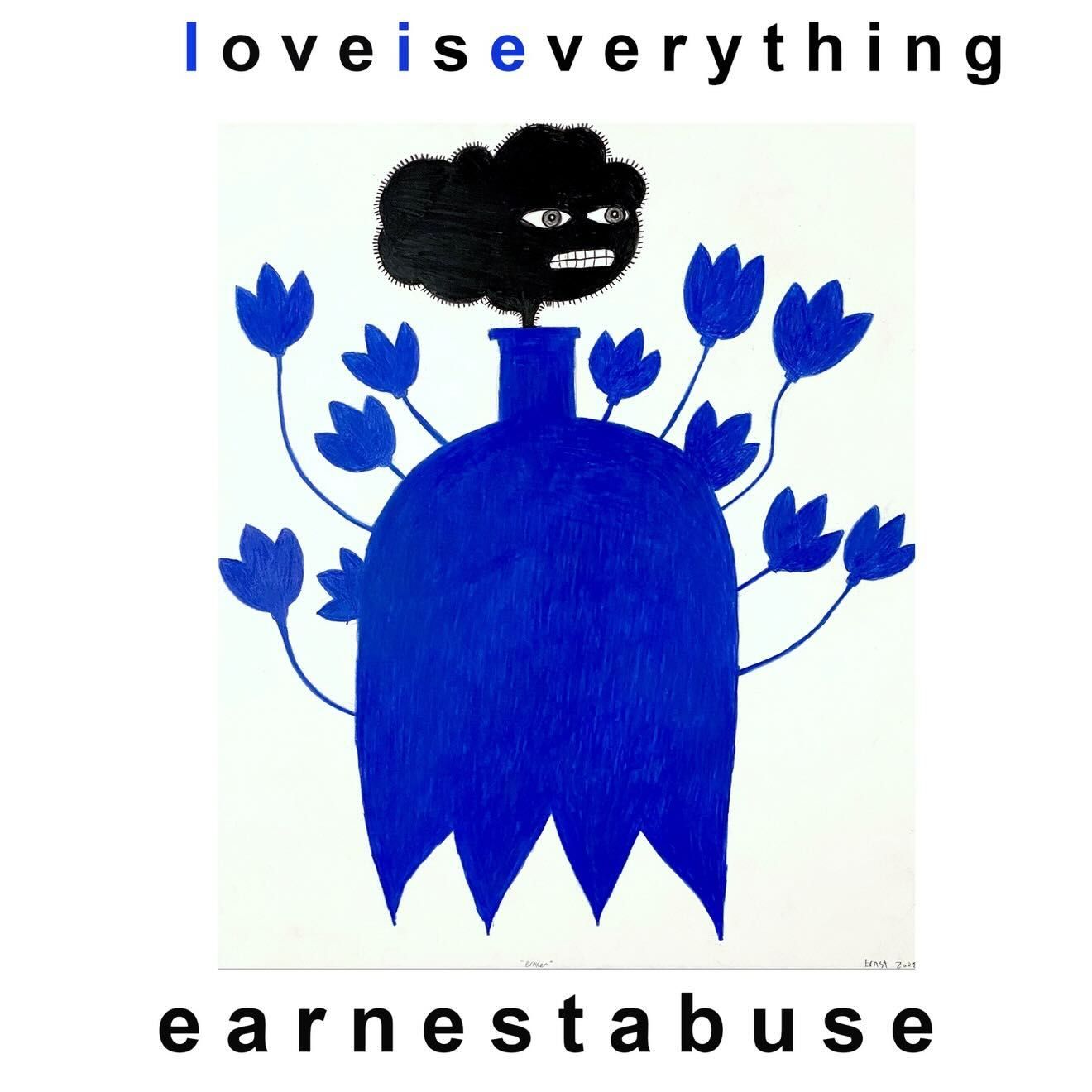
On June 17th, Matt Ernst released his new album Love is Everything under his artist name Earnest Abuse. Recorded and produced by Mike Abiuso at Behind the Curtains Media, the album flows between gentle synths, anthemic horns, and heavy rock guitar creating a nice balance that pulls in glimpses of Ernst’s eclectic musical influences.
I asked Ernst what inspired him to create this record:
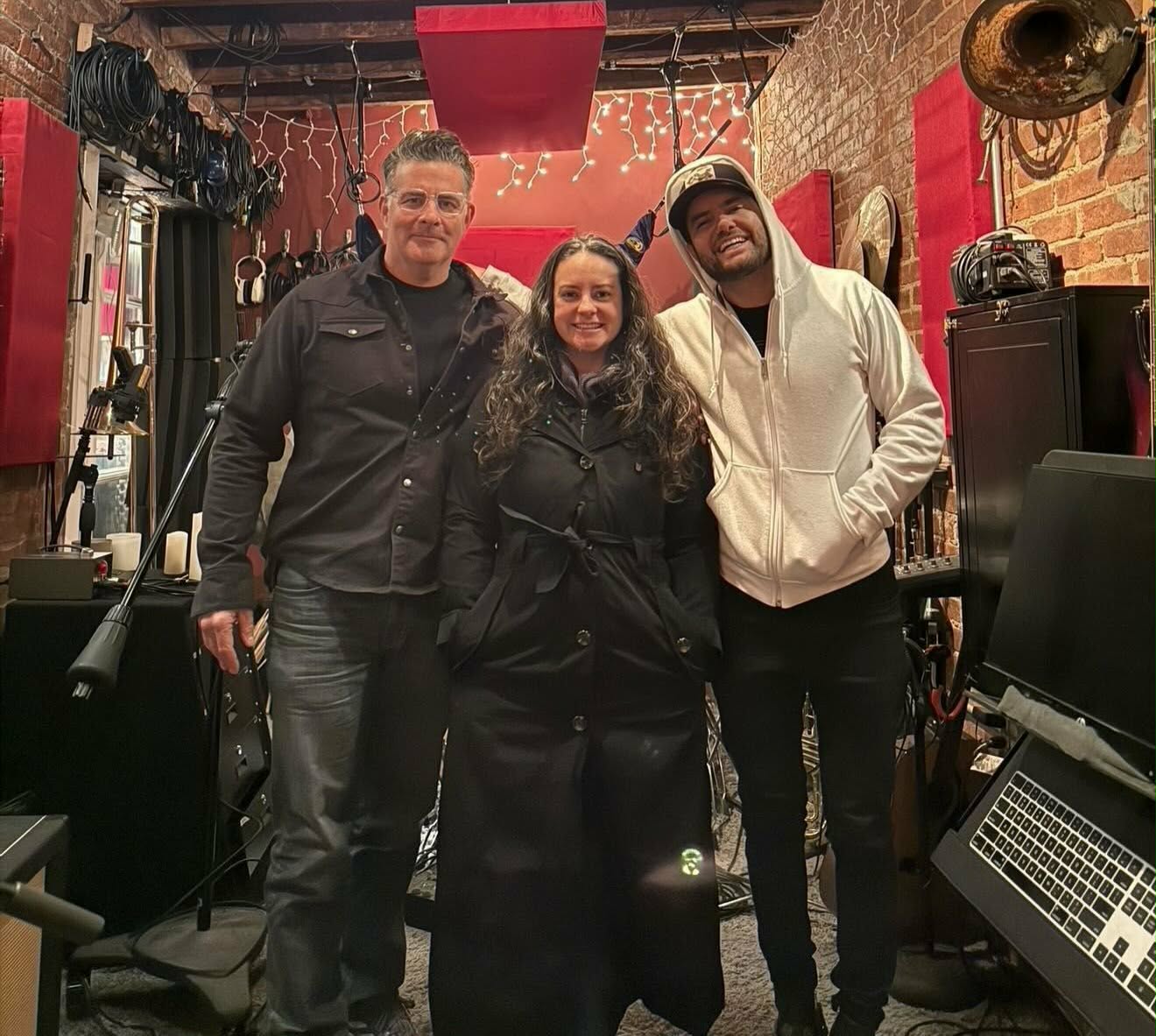
As a lifelong musician and drummer in many bands (The Tracys, The Sparkles, Win Win, Titanic, Tee Tee Summer), I had contributed elements as a writer and producer but never really focused on my own expression. One day, I was talking to my friend and producing partner Mike Abiuso from Behind the Curtains Media about once again producing songs by another songwriter. Mike said, “Matt, why don’t you just write your own stuff?” I was intimidated at first. For one thing, to say I am not a singer is an understatement. I’ve often said that my voice is about the only instrument I can’t play! But with Mike’s encouragement I wrote [a love song called] “Audrey” and the flood gates sort of opened. The easiest thing to write about is love! From there we built the record song by song. I wrote lyrics, basic chord changes, and melodic ideas at night, and we built them out and recorded by day. It was an eight month process and just such a joy. We had an absolute blast with our collaborators: Geneviève Faivre (vocals), Alex Nauth (horns), and Lacy Rostyak (strings). Much to his chagrin, Mike ended up singing on most of the tracks with a heavy assist from the great Geneviève, but with encouragement, coaching, and a modicum of engineering wizardry, I actually ended up singing (and rapping) on a few tracks.
Knowing the first song created for this album was a love song makes complete sense. While each song on the 10-track album tells its own story, the track listing itself feels intentional as it moves from one song to the next exploring various types of love.
“Let’s Go!”
The album opens with a heavy, upbeat song called “Let’s Go!” This song will have you ready to fight, but with brief sections of quieter moments among the heavy guitars and drums as well as vocals from Abiuso, Faivre, and Ernst throughout, this track does a good job of setting expectations for the rest of the album.
“Better Days”
The second track “Better Days” is what hooked me for the whole album. Beginning with what sounds like an upright piano, the heavier instruments are also accompanied by an anthemic horn line that launches each chorus. “Better Days” continues the fight march from the first track with verses that feature Abiuso’s gritty lead vocals that seem to spit venom, but his tone softens a bit on the chorus as he belts out “Where are those better days?” I’m also particularly fond of the drop out in the middle of the second chorus. Who doesn’t love some chugga chuggas on a guitar with radio-filtered lead vocals? It’s like going over the top of a rollercoaster before the track sends you careening down the hill with the album’s signature heavy guitars and rock drums. The track ends with one final piano note, the same one it started with.
“B.L.T.L”
“B.L.T.L” (Better Late Than Later) brings a quieter vibe as Ernst’s lyrics examine aging, reflecting on one’s mistakes, and the importance of finding the courage to keep moving forward in the wake of those mistakes. You can hear this sentiment in the song’s pointed choruses. “It’s better late than later / to get what you want. / It’s better late than later / to find the love you lost.”
“Audrey”
One of my personal favorites is “Audrey.” Ernst’s description of the song had me swooning: “It is a simple love note to my partner of over a decade. I had always promised I’d write a song for her and this was my opportunity!” The song opens with rolling synth chords, but light drums and Abiuso’s sweet vocals quickly come in with Ernst’s words describing what a dreadful headspace he was in before he met his partner. Faivre’s vocals join Abiuso for the pre-chorus and continue through the chorus’s words of gratitude. Light horns come in at the first chorus, and the triumphant post-chorus features bigger horns accompanying beautiful operatic vocals from Faivre that are reminiscent of some of my favorite Queen songs. The post-chorus is what rolls us to the end of the song, including an incredible guitar solo from Ernst that brings back pieces of the chorus’s melody.
“Into the Darkness”
Ernst calls “Into the Darkness” a “murder ballad on steroids–a cross between Johnny Cash and Slick Rick.” This is the first song we hear Ernst on lead vocals with Abiuso and Faivre lending their voices to the chorus. The post-chorus has a cool triplet guitar riff that I can’t get enough of (I love a triplet). The guitars really show off Ernst’s classic rock skills, and towards the end of the song an organ pops in to fill out the sound.
“Take a Bullet” and “Both My Kids Got Badges”
The songs “Take a Bullet” and “Both My Kids Got Badges” dive into Ernst’s perspectives on the current political climate and increasing political violence. “Take a Bullet” starts with a much softer vibe with acoustic guitar and Abiuso’s gentle vocals. The chorus goes harder before pulling back to the gentler tone again on the second verse. The theme of love is still intertwined in this one, ending with the line “You might be missing me / but I will love you / forever.”
“Both My Kids Got Badges” is a nod to Ernst’s children who work in law enforcement (one is a US Marshall and the other is a state prosecutor). This track includes some really unique vocals from Faivre and Abiuso that set it apart from the other songs and show off the range of both vocalists. Abiuso’s coarse spoken vocals on the verses somehow rumble and whisper at the same time, and I found myself leaning towards the speaker as the performance drew me into the story. The chorus introduces Faivre’s vocals layered in with Abiuso, who briefly jumps back into a higher register until the gritty refrain hits. The outro features Faivre’s incredible grasp of Middle Eastern scales while Abiuso adds low vocals inspired by Gregorian and African throat singing.
“I Blame You For Everything”
Ernst explained “I Blame You For Everything” is “kind of the inverse of ‘Audrey’” in that it reflects on relationships that went bad and the way we tend to blame each other for our problems.The intro makes it feel like the heavy guitars are about to blast through, but everything quickly pulls back as a Wurlitzer accompanies Abiuso’s gentle vocals. Faivre’s vocals join Abiuso on the chorus, and her vocals can be heard through the rest of the song as supporting background vocals that eventually blossom into a full blown choral sound. The middle section changes vibes completely as the song drops to just banjo and bass and Ernst gives a dramatic speech about how love is too big to be contained. The whole section has video game Bioshock Infinite vibes (such a nerd reference, sorry not sorry). The song jolts out of this middle section back into the main refrain with heavy guitars and a scream from Faivre. Layered vocals and ad-libs from Faivre accompanied by heavy guitars and big drums take us to the end.

“Dumb Ideas”
Ernst says “Dumb Ideas” was his homage to 80’s and 90’s hip hop–Wu Tang, Nas, NWA–as well as bands like Rage Against the Machine and Body Count, though his son said he thinks it sounds more like Limp Bizkit. It includes his favorite lyric on the whole record: “Cock-blocking the shotgun / ghost riding the whip / if you challenge me you’ll get a fat lip.” He said he thinks it’s such an absurd line that it just makes him smile.
“Love is Everything”
The album appropriately closes with the title track “Love is Everything.” Each track on the album touches on a different facet of love: love for Ernst’s romantic partner, children, society as a whole, and–most importantly–himself. This is by far, my favorite track on the album (followed closely by “Audrey”). The song starts gently, but it’s obvious from the start that by the end the musical vibe will hit hard. Violin begins to slip in after the first chorus, playfully dancing around Abiuso’s vocals. We really hear the range of the strings after the third chorus where they’re featured in an instrumental section. As that section comes to a close, the song kicks into high gear with Ernst’s soaring guitar solo and Abiuso holding down the refrain while Faivre expertly ad libs to the end.
Love is Everything is available on all major platforms, including unique music videos Ernst created using his own artwork available on Youtube. With the help of AI, he was able to bring his paintings to life, adding another bit of his artistry to the stories told through his music. You can find his music videos on his Youtube channel called Shotgun Nature.